Spinal Decompression in Westminster
 Back and neck discomfort can wear on you, especially when it keeps returning or never quite settles. At Puritz Chiropractic Center, spinal decompression is one option Westminster Chiropractor Dr. Allan Puritz considers when pressure on a spinal disc or nerve seems to be part of what’s going on.
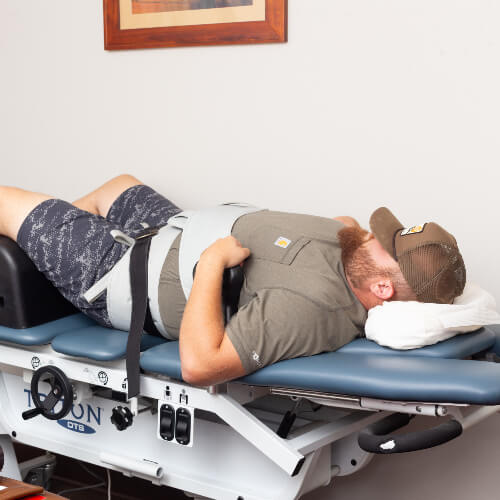
It’s noninvasive: a computerized table gently stretches and releases the spine in controlled cycles.
NEW PATIENTS
How Spinal Decompression Works
The table creates small shifts in pressure through the spine as you go. That takes stress off certain discs and nearby nerves, and lets the affected area move a little more freely.
This isn’t the same as a chiropractic adjustment. An adjustment is a precise manual technique aimed at restoring motion in a restricted joint. Decompression is passive. You lie there. The system does the work, applying a measured pull over several minutes.
When Dr. Puritz May Recommend It
Bulging or herniated discs. Sciatica. Degenerative disc changes. Pinched nerves. Neck or low back discomfort that just won’t let up. These are the concerns that typically bring decompression into the conversation, and spinal stenosis can sometimes fit the picture too.
It’s not for everyone, though. Dr. Puritz looks at your symptoms, your health history, and what your exam turns up before deciding whether it belongs in your care.
What a Session Feels Like
You’ll lie on the decompression table while a harness gets positioned around the area being treated. From there, the system moves through gentle cycles of stretch and release.
Most sessions run 15 to 20 minutes. You might notice a gradual pulling sensation, though the force stays within your comfort range the whole time. And if something feels off, the session gets stopped or adjusted right away.
What You Do Between Visits Matters Too
The table doesn’t do all the work. Depending on your findings, Dr. Puritz might also recommend specific exercises, walking, stretching, posture changes, or small adjustments to how you sit and lift during the day. It’s all based on what he actually sees in your case.
Frequently Asked Questions
What is Spinal Decompression Therapy?
Spinal decompression therapy is a non-surgical, comfortable traction therapy for the relief of back and leg pain or neck and arm pain. During this procedure, by cycling through distraction and relaxation phases and by proper positioning, a spinal disc can be isolated and placed under negative pressure, causing a vacuum effect within it.
What can this vacuum effect do?
The vacuum effect accomplishes two things. From a mechanical standpoint, disc material that has protruded or herniated outside the normal confines of the disc can be pulled back within the disc by the vacuum created within the disc. Also, the vacuum within the disc stimulates in growth of blood supply, secondarily stimulating a healing response. This results in pain reduction and proper healing at the injured site.
What machine is used for this purpose?
There are a number of spinal decompression machines presently used in the United States. After significant research, Dr. Puritz has chosen to use the TX1 machine manufactured by Chattanooga, Inc., the premier manufacturer of physical therapy machines.
Who can benefit from Spinal Decompression Therapy?
Spinal decompression therapy is designed to unload the spinal disc. Any back pain or neck pain caused in whole or in part by a damaged disc may be helped by spinal decompression therapy. These conditions include herniated, protruding or bulging discs, spinal stenosis, sciatica or radiculopathy (pinched nerves).
Are there conditions where Spinal Decompression is not indicated?
Spinal decompression therapy is usually not recommended for pregnant women, or patients who have severe osteoporosis, severe obesity or severe nerve damage. It is not recommended for patients over 70. However, every patient is evaluated on an individual basis. Spinal surgery with instrumentation (screws and metal plates or “cages”) is also contraindicated. Surgery to the discs without fusion or fusion using bony replacement is not contraindicated.
How often do I take treatment sessions? How long does each session last?
Each session includes decompression therapy and spinal stabilization exercises and takes about 1 hour. Spinal decompression is usually performed 3-5 times a week for 15-20 sessions.
What are the results of Spinal Decompression Therapy?
Over 70% of patients have good pain relief. This success rate is similar to surgical results.
I have had spinal surgery, but continue to have pain. Can I try Spinal Decompression Therapy?
Spinal decompression therapy can help people with back pain after failed spinal surgery. It can be performed in most patients who have not been left with an unstable spine after surgery.
How can I be scheduled for Spinal Decompression Therapy?
Simply call our Westminster chiropractic office at (410) 848-8022 and tell the receptionist that you are interested in decompression therapy. An initial consultation can usually be scheduled within 48 hours.
Is Spinal Decompression Right for You?
If back or neck discomfort keeps getting in your way, contact Puritz Chiropractic Center to schedule a consultation with Dr. Puritz. He can look into what’s contributing and explain whether spinal decompression makes sense for you.
CONTACT US

Spinal Decompression Westminster MD | (410) 848-8022